









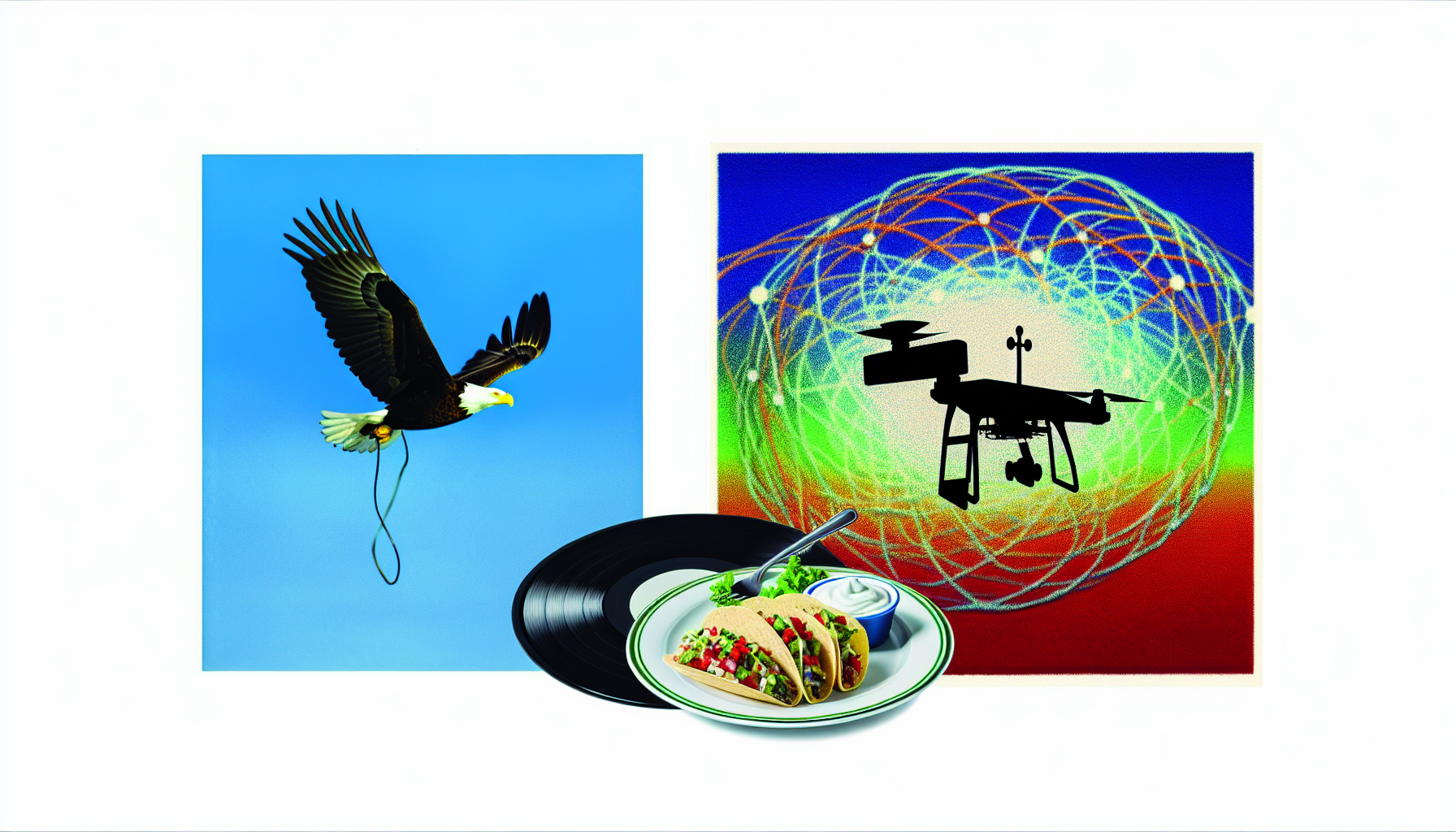
Explore the intersection of artificial intelligence and human experience, the rise of drones in a surveilled world, and the cultural significance of icons like Eagles the band and Tacos el Gordo. Our journey traverses the landscape of technology, psychology, entertainment, and cuisine, offering a comprehensive view of today’s multi-faceted society.
Artificial Intelligence and the Human Element
Artificial Intelligence (AI) is a field that stretches back decades, harboring the dreams and aspirations of scientists, engineers, and theorists alike. From its nascent stages, the goal has always been ambitious: to create machines capable of thinking, learning, and acting with human-like intelligence. Today, AI is no longer a speculative marvel of the future but a pivotal component of our daily lives. Virtual assistants like Siri and Alexa, recommendation algorithms on streaming services, and automated customer service systems are all manifestations of AI technologies that have seamlessly integrated into the fabric of society.
One of the principal aims of current AI research is the development of artificial general intelligence (AGI), a type of intelligence that can understand, learn, and apply knowledge across a wide range of tasks, a level of versatility that is currently unique to humans. Achieving AGI would mark a significant milestone, as it implies the creation of AI systems that can perform any intellectual task that a human being can. This aspiration brings to the forefront not just technical challenges but profound ethical considerations.
The ethical debate surrounding AI and AGI is complex, raising questions about the nature of consciousness, the value of human labor, and the risks associated with autonomous decision-making by machines. There’s the fear of displacement, as AI technologies become capable of performing tasks traditionally done by humans, potentially at a faster rate and with greater efficiency. Moreover, the development of AGI raises existential questions about control and the possibility of creating entities that could eventually surpass human intelligence.
As AI continues to evolve, it invites us to reflect on what it means to be human in an age where machines can mimic human cognition. The potential of AI to enhance our lives is vast, from automating mundane tasks to aiding in critical decision-making processes and even pushing the boundaries of creativity. However, the journey towards AGI must be navigated with caution, ensuring that these technologies augment human capabilities without compromising ethical standards or societal well-being.
As we contemplate the future of AI, it’s essential to consider the subtle interplay between technological advancement and human values. Ensuring that AI development is aligned with the principles of fairness, accountability, and transparency will be crucial in mitigating risks and harnessing the potential of AI to contribute positively to society. The conversation about AI is not merely about the capabilities of machines but about shaping a future that reflects our collective values and aspirations.
The All-Seeing Eye: Drones and Modern Paranoia
Unmanned aerial vehicles, or drones as they are more commonly known, have evolved significantly from their original military applications to become a ubiquitous part of everyday civilian life. This transition from highly specialized tools of warfare to accessible gadgets for photography, real-time surveillance, and even doorstep delivery highlights a technological democratization. However, this widespread adoption comes with its own set of societal consequences, particularly concerning privacy and the growing paranoia around the concept of being constantly watched.
The evolution of drone technology has seen these devices become ever more compact, affordable, and capable, allowing for an unprecedented level of detail in aerial imagery and surveillance. This capability, while invaluable for tasks such as environmental monitoring, agricultural assessments, and disaster relief efforts, also opens the door for misuse. The psychological impact of living under the potential gaze of unknown observers cannot be understated. A society that feels watched is one that can easily succumb to paranoia, fueled by the anonymity and potential overreach of drone operators. The silent buzz of a drone overhead can today elicit unease and suspicion, emblematic of the broader concerns regarding privacy in the digital age.
Contrast this with the positive applications of drones, particularly in fields such as precision agriculture, where they offer a means to monitor crop health and irrigation needs, highlighting the nuanced balance between utility and intrusion. Drones have the potential to revolutionize environmental conservation efforts, enabling detailed monitoring of deforestation, wildlife, and pollution levels over vast and often inaccessible areas. The duality of drones, as both guardians of the natural world and potential invaders of personal space, encapsulates the broader debate around technological advancement and individual privacy rights.
As society grapples with these realities, the line between public benefit and private infringement blurs. The challenge lies in developing regulatory frameworks that harness the benefits of drone technology while safeguarding against its intrusions. Such measures are essential in ensuring that drones, as tools of innovation, do not become instruments of division.
In balancing the scales between privacy and progress, it is imperative to engage in open dialogues about the ethical deployment of drones. These conversations, echoing the broader debates surrounding artificial intelligence in the previous chapter, highlight the ongoing need to marry technological advancement with societal values. As we move forward, the collective decisions made in this realm will shape the fabric of our daily lives, directly influencing how we interact with the evolving landscape of modern innovation, from the sky-high ambitions of unmanned aerial vehicles to the ground-level realities of living in a watched society.
Cultural Vibes: Eagles and Tacos el Gordo
Step into the cultural fabric woven by the legendary band Eagles and the culinary institution known as Tacos el Gordo, each a beacon of their respective realms, influencing the paradigm of music and food. These icons encapsulate the essence of their era, leaving an indelible mark on the sands of pop culture, showcasing how art and cuisine can mirror societal shifts and preferences, much like the technological advancements explored in the realm of drones and their dual-edged impact on society.
The Eagles, forming in the early 1970s, quickly ascended to the zenith of rock music, engraining themselves into the auditory landscapes of generations. Their music, characterized by harmonious melodies and poignant lyrics, reflected the cultural and political milieu of their time, offering an escape while simultaneously urging listeners to confront the realities of their era. Through timeless tracks like “Hotel California” and “Take It Easy,” the Eagles crafted a soundscape that resonated with the longing and disillusionment felt by many, embedding themselves in the cultural consciousness. Their ability to encapsulate the zeitgeist of the 70s while maintaining a relevance that spans decades is a testament to their artistry and the universal appeal of their music.
Parallel to the enduring legacy of the Eagles in music is the rise of Tacos el Gordo in the culinary world. Originating from Tijuana, Mexico, and expanding into the United States, Tacos el Gordo has become synonymous with authentic Mexican cuisine, bringing the rich flavors and traditions of Mexican street food to a broader audience. Their commitment to quality ingredients, traditional cooking methods, and authentic recipes has not only popularized Tijuana-style tacos but also highlighted the importance of cultural authenticity in a globalized culinary landscape. The success of Tacos el Gordo underscores a communal yearning for genuine experiences and connections through food, paralleling the desire for authentic expression and emotional resonance found in music.
Both the Eagles and Tacos el Gordo have navigated the tumultuous waves of cultural shifts, technological advancements, and changing societal norms to emerge as stalwarts of their respective fields. The Eagles’ music, with its layers of meaning and reflection, and Tacos el Gordo’s dedication to culinary authenticity, serve as reminders of the enduring power of art and cuisine to connect, comfort, and inspire across time and boundaries. Just as the discussion on drones revealed a society grappling with the implications of technological omnipresence, the legacy of the Eagles and the success of Tacos el Gordo reflect a collective endeavor towards grounding ourselves in the familiar and the genuine amid the incessant march of progress.
Conclusions
Through the lens of AI, drones, the Eagles, and Tacos el Gordo, we’ve explored the symbiotic relationship between technology, psychology, entertainment, and gastronomy. In the world’s constant evolution, innovation meets heritage, and fresh concerns merge with timeless experiences, reminding us that the fabric of society is a mosaic of the past, present, and the unlimited potential of the future.